Char: 0
Words: 0
Char: 0
Words: 0
 
English to Nepali Translation Examples
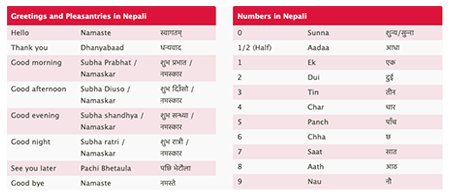
Hello.
नमस्ते।
Welcome.
स्वागत छ।
Good morning.
शुभ प्रभात।
Nice to meet you.
तपाईंलाई भेटेर खुशी लाग्यो।
Thank you.
धन्यवाद।
How are you?
तपाईं कस्तो हुनुहुन्छ?
Please.
कृपया।
Excuse Me.
माफ गर्नुहोस्।
Sorry.
माफ गर्नुहोस्।
Yes.
हो।
No.
होइन।
You’re welcome.
तपाईंलाई स्वागत छ।
Have a nice day.
तपाईंको दिन शुभ रहोस्।
Good morning.
शुभ प्रभात।
Good afternoon.
शुभ दिउँसो।
Good night.
शुभ रात्रि।
Nice to meet you.
तपाईंलाई भेटेर खुशी लाग्यो।
It’s a pleasure to meet you.
तपाईंलाई भेटेर खुशी लाग्यो।
Have a good weekend.
सप्ताहांत शुभ रहोस्।
Let the good times roll.
राम्रो समय बित्न दिनुहोस्।
Sweet dreams.
मिठा सपनाहरू।
Best Wishes.
शुभकामनाहरू।
Goodbye.
बिदाई।
I love you.
म तिमीलाई माया गर्छु।
I love you too.
म पनि तिमीलाई माया गर्छु।
I love you more.
म तिमीलाई धेरै माया गर्छु।
I'm deeply in love with you.
म तिमीलाई गहिरो माया गर्छु।
We love you.
हामी तिमीलाई माया गर्छौं।
You are beautiful.
तिमी सुन्दर छौ।
I will miss you.
म तिमीलाई सम्झनेछु।
I like you.
म तिमीलाई मन पराउँछु।
Every moment with you is precious.
तिमीसँग बिताएको हरेक क्षण अनमोल छ।
I can't imagine my life without you.
म तिमी बिना मेरो जीवन कल्पना गर्न सक्दिन।
Will you marry me?
के तिमी मसँग विवाह गर्छौ?
How much does it cost?
यसको मूल्य कति पर्छ?
Do you have this in blue colour?
के तपाईंसँग यो नीलो रंगको छ?
Can I try this on?
के म यो लगाएर हेर्न सक्छु?
Where is the fitting room?
फिटिंग कोठा कहाँ छ?
That's expensive!
त्यो महँगो छ!
Do you have any sales or discounts?
के तपाईंसँग कुनै बिक्री वा छुट छ?
What’s the best price you can give me?
तपाईंले मलाई दिन सक्ने उत्तम मूल्य के हो?
Is this the final price?
के यो अन्तिम मूल्य हो?
Can I return this if it doesn't fit?
यदि यो फिट भएन भने म यो फिर्ता गर्न सक्छु?
Can I pay by cash or card?
के म नगद वा कार्ड मार्फत भुक्तानी गर्न सक्छु?
Can I get a receipt, please?
के म रसिद पाउन सक्छु, कृपया?
I’d like to exchange this for a different size.
म यसलाई फरक आकारमा साट्न चाहन्छु।
Where is the bus station?
बस स्टेशन कहाँ छ?
When does it arrive?
कहिले आइपुग्छ?
Where can I buy a ticket?
म कहाँ टिकट किन्न सक्छु?
How much is a ticket?
टिकट कति पर्छ?
I would like to change my ticket.
म मेरो टिकट परिवर्तन गर्न चाहन्छु।
Where is the taxi stand?
ट्याक्सी स्ट्यान्ड कहाँ छ?
Please call a taxi for me.
कृपया मेरो लागि ट्याक्सी बोलाउनुहोस्।
How much will it cost?
कति लाग्छ?
Can you take me to the hotel?
के तपाईं मलाई होटलमा लैजान सक्नुहुन्छ?
I have a reservation for a room.
मेरो कोठाको लागि आरक्षण छ।
How much is the room?
कोठा कति पर्छ?
My room needs to be cleaned.
मेरो कोठा सफा गर्नु पर्छ।
Where is the restaurant?
रेस्टुरेन्ट कहाँ छ?
I would like breakfast.
मलाई ब्रेकफास्ट चाहियो।
I would like lunch.
मलाई दिउँसोको खाना चाहियो।
I would like dinner.
मलाई बेलुकाको खाना चाहियो।
I would like some water.
मलाई पानी चाहियो।
May I see a menu?
के मलाई मेनु हेर्न मिल्छ?
I am ready to order some food.
म केही खाना अर्डर गर्न तयार छु।
I'm allergic to peanuts.
मलाई बदामबाट एलर्जी छ।
I'm allergic to fish.
मलाई माछाबाट एलर्जी छ।
I don't eat beef.
म गाईको मासु खाँदिन।
I'm vegan.
म शाकाहारी हुँ।
I would like to pay.
म तिर्न चाहन्छु।


Watch How to Translate English to Nepali for FREE

Visit our YouTube page to watch video on full screen.

English to Nepali Phrases with Explanations

  • I Love you
  • म तिमीलाई माया गर्छु(Ma timilai maya garchu)
    Informal; used with someone you are close to

Usage: Casual
  • Welcome
  • स्वागतम्(Swagatam)
    A formal or ceremonial welcome; स्वागत छ is more natural in everyday speech

Usage: Formal
  • Hello
  • नमस्ते(Namaste)
    A respectful all-purpose greeting used throughout the day

Usage: General
  • How are you?
  • तपाईंलाई कस्तो छ? तिमीलाई कस्तो छ?
    Note:
    तपाईंलाई कस्तो छ? is polite — use with elders, strangers, or in formal situations
    तिमीलाई कस्तो छ? is casual — use with friends or peers

Usage: Polite / Casual
  • I'm fine. You?
  • म ठिक छु। र तपाईं? म ठिक छु। र तिमी?
    Note:
    र तपाईं? is polite
    र तिमी? is casual

Usage: Polite / Casual
  • What is your name?
  • तपाईंको नाम के हो? तिम्रो नाम के हो?
    Note:
    तपाईंको नाम के हो? is polite
    तिम्रो नाम के हो? is casual

Usage: Polite / Casual
  • Pleased to meet you
  • तपाईंलाई भेटेर खुशी लाग्यो तिमीलाई भेटेर खुशी लाग्यो
    Note:
    तपाईंलाई is polite — use when meeting someone for the first time in a formal setting
    तिमीलाई is casual — use with peers or in informal introductions

Usage: Polite / Casual
  • Thank you
  • धन्यवाद(Dhanyabaad)
    The standard way to say thank you in Nepali; थ्यांक्यू (English loanword) is also widely used in everyday speech

Usage: General
  • Excuse me / Sorry
  • माफ गर्नुस्! माफ गर!
    Note:
    माफ गर्नुस्! is polite — use with elders or strangers
    माफ गर! is casual — use with friends or peers

Usage: Polite / Casual
  • See you!
  • फेरि भेटौला(Pheri bhetaula)
    A casual way to say goodbye; literally means let's meet again

Usage: Casual
  • Good morning
  • शुभ प्रभात नमस्कार
    Note:
    शुभ प्रभात is formal or literary
    नमस्कार is more natural as an everyday polite greeting

Usage: Formal / Everyday
  • Good afternoon
  • शुभ मध्यान्ह नमस्कार
    Note:
    Literal: शुभ मध्यान्ह
    Natural: नमस्कार
    Nepali does not commonly use a separate afternoon greeting; नमस्कार works throughout the day

Usage: General
  • Good night
  • शुभ रात्री(Shubha raatri)
    Used when saying goodbye at night or before going to bed

Usage: General
  • Have a good journey
  • राम्रो यात्रा गर्नुहोस्(Ramro yatraa garnuhos)
    A polite way to wish someone a pleasant journey

Usage: Formal
  • How's it going?
  • कस्तो चलिरहेको छ?(Kasto chaliraheko cha?)
    A casual expression used with friends or acquaintances

Usage: Casual
  • What's up?
  • के छ?(Ke cha?)
    A very informal expression commonly used among close friends

Usage: Casual
  • Nice weather today
  • आज राम्रो मौसम छ(Aja ramro mausam cha)
    A natural everyday comment about the weather

Usage: Everyday
  • How was your weekend?
  • तपाईंको सप्ताहन्त कस्तो थियो? तिम्रो सप्ताहन्त कस्तो थियो?
    Note:
    तपाईंको is polite
    तिम्रो is casual

Usage: Polite / Casual
  • Any plans for the weekend?
  • सप्ताहन्तको लागि कुनै योजना?(Saptahantako lagi kunai yojana?)
    A casual way to ask about someone's weekend plans

Usage: Casual
  • Long time no see!
  • धेरै दिनपछि भेट भयो!(Dherai dinapachi bhet bhayo!)
    A casual expression used when meeting someone after a long time

Usage: Casual
  • Have you been here before?
  • के तपाईं पहिले यहाँ आउनुभएको छ? के तिमी पहिले यहाँ आएका छौ?
    Note:
    तपाईं is polite
    तिमी is casual

Usage: Polite / Casual
  • What do you do for fun?
  • मनोरञ्जनको लागि तपाईं के गर्नुहुन्छ? मनोरञ्जनको लागि तिमी के गर्छौ?
    Note:
    तपाईं ... गर्नुहुन्छ? is polite
    तिमी ... गर्छौ? is casual

Usage: Polite / Casual
  • Do you come here often?
  • के तपाईं यहाँ अक्सर आउनुहुन्छ? के तिमी यहाँ अक्सर आउँछौ?
    Note:
    तपाईं ... आउनुहुन्छ? is polite
    तिमी ... आउँछौ? is casual

Usage: Polite / Casual
  • What a small world!
  • संसार कति सानो छ!(Sansar kati sano cha!)
    Used when you unexpectedly discover a connection with someone

Usage: Casual
  • That's interesting
  • त्यो रोचक छ(Tyo rochak cha)
    A natural everyday way to say that something is interesting

Usage: General
  • I see what you mean
  • म बुझें तपाईंको मतलब(Ma bujhe tapainko matalab)
    A natural way to show understanding of what someone has said

Usage: Casual
  • That's cool!
  • त्यो राम्रो छ!(Tyo ramro cha!)
    A natural casual way to express approval or enthusiasm

Usage: Casual
  • Take care!
  • आफ्नो हेरचाह गर्नुहोस्! आफ्नो ख्याल गर!
    Note:
    गर्नुहोस् is polite
    गर is casual

Usage: Polite / Casual
  • Catch you later
  • पछि भेटौंला(Pachi bhetaula)
    A casual way to say you will see someone later

Usage: Casual
  • Do you speak English?
  • के तपाईँ अङ्ग्रेजी बोल्नुहुन्छ? के तिमी अङ्ग्रेजी बोल्छौ?
    Note:
    तपाईँ is polite
    तिमी is casual

Usage: Polite / Casual
  • Please speak slowly
  • कृपया बिस्तारै बोल्नुहोस् बिस्तारै बोल न
    Note:
    कृपया बिस्तारै बोल्नुहोस् is polite — use with elders or strangers
    बिस्तारै बोल न is casual — use with friends or peers

Usage: Polite / Casual
  • Where are the restrooms?
  • शौचालय कहाँ छ?(Shauchalaya kaham cha?)
    शौचालय is the standard Nepali word for restroom or toilet; English words like toilet and bathroom are also widely understood

Usage: Everyday
  • Can I change money?
  • के म पैसा साट्न सक्छु?(Ke ma paisa saatna sakchu?)
    Useful at banks or money exchange counters

Usage: Everyday
  • How much is this?
  • यो कति हो?(Yo kati ho?)
    A common way to ask the price of something in a shop or market

Usage: Everyday
  • It's too expensive!
  • यो धेरै महँगो छ!(Yo dherai mahango cha!)
    Commonly used when bargaining in markets or shops

Usage: Casual
  • Left / Right / Straight
  • बाँया / दाँया / सिधा(Baaya / daaya / sidha)
    Common direction words used when asking for or following directions

Usage: Everyday
  • Today is a nice day, isn't it?
  • आजको दिन राम्रो छ, हैन र?(Ajako dina ramro cha, haina ra?)
    A natural way to start a conversation about the weather or the day

Usage: General
  • Where are you from?
  • तपाईं कहाँबाट हुनुहुन्छ? तिमी कहाँका हौ?
    Note:
    तपाईं कहाँबाट हुनुहुन्छ? is polite
    तिमी कहाँका हौ? is casual

Usage: Polite / Casual
  • Do you live here?
  • तपाईं यहाँ बस्नुहुन्छ? तिमी यहाँ बस्छौ?
    Note:
    तपाईं ... बस्नुहुन्छ? is polite
    तिमी ... बस्छौ? is casual

Usage: Polite / Casual
  • Do you like it here?
  • तपाईंलाई यहाँ मन पर्छ? तिमीलाई यहाँ मन पर्छ?
    Note:
    तपाईंलाई is polite
    तिमीलाई is casual

Usage: Polite / Casual
  • Yes, I like it here.
  • हो, मलाई यहाँ मन पर्छ।(Ho, malai yaham mana parcha.)
    A natural way to say that you enjoy being in a place

Usage: General
  • How long are you here for?
  • तपाईं यहाँ कति समयका लागि हुनुहुन्छ? तिमी यहाँ कति समयका लागि छौ?
    Note:
    तपाईं ... हुनुहुन्छ? is polite
    तिमी ... छौ? is casual

Usage: Polite / Casual
  • I am here for three days / weeks.
  • म यहाँ तीन दिन / हप्ताको लागि छु।(Ma yaham tina dina / haptako lagi chu.)
    Replace तीन with the appropriate number and choose दिन or हप्ता as needed

Usage: General
  • Where are you going?
  • तपाईं कहाँ जाँदै हुनुहुन्छ? तिमी कहाँ जाँदैछौ?
    Note:
    तपाईं ... हुनुहुन्छ? is polite
    तिमी ... जाँदैछौ? is casual

Usage: Polite / Casual
  • I am going to shopping.
  • म किनमेल गर्न जाँदैछु।(Ma kinamela garna jaandaichu.)
    A natural everyday expression for going to the shops

Usage: Casual
  • How old are you?
  • तपाईंको उमेर कति हो? तिम्रो उमेर कति हो?
    Note:
    तपाईंको is polite
    तिम्रो is casual

Usage: Polite / Casual
  • I am 23 years old.
  • म २३ वर्षको भएँ।(Ma 23 varsako bhaem.)
    Replace २३ with your own age

Usage: General
  • What is your occupation?
  • तपाईंको पेशा के हो? तिम्रो पेशा के हो?
    Note:
    तपाईंको पेशा के हो? is polite
    तिम्रो पेशा के हो? is casual

Usage: Polite / Casual
  • I am a student.
  • म विद्यार्थी हुँ।(Ma vidyarthi hum.)
    विद्यार्थी is gender-neutral and used for all students regardless of gender

Usage: General
  • I am retired.
  • म सेवानिवृत्त छु।(Ma sevanivrtta chu.)
    सेवानिवृत्त is the formal term; रिटायर्ड (English loanword) is also commonly used in conversation

Usage: General
  • What is your ... ? (email, phone number, address)
  • तपाईंको ... के हो? (इमेल, फोन नम्बर, ठेगाना)तिम्रो ... के हो? (इमेल, फोन नम्बर, ठेगाना)
    Note:
    तपाईंको is polite
    तिम्रो is casual
    Replace ... with इमेल, फोन नम्बर, ठेगाना or another appropriate noun

Usage: Polite / Casual
  • It has been great meeting you.
  • तपाईंलाई भेटेर राम्रो लाग्यो। तिमीलाई भेटेर राम्रो लाग्यो।
    Note:
    तपाईंलाई is polite
    तिमीलाई is casual

Usage: Polite / Casual
  • Keep in touch!
  • सम्पर्कमा रहनुस्! भेट्दै गरौं!
    Note:
    सम्पर्कमा रहनुस्! is polite — stay in contact
    भेट्दै गरौं! is casual — literally let's keep meeting

Usage: Polite / Casual
  • Where can I find a hotel?
  • होटल कहाँ छ?(Hotala kaham cha?)
    A natural way to ask where you can find a hotel

Usage: Everyday
  • How much is it per night?
  • प्रति रात कति हुन्छ?(Prati rata kati huncha?)
    A common way to ask the price of a room per night

Usage: Everyday
  • Is breakfast included?
  • नाश्ता समावेश छ?(Nasta samavesa cha?)
    A common question when booking or checking into accommodation

Usage: Everyday
  • I would like to book a room, please.
  • म एउटा कोठा बुक गर्न चाहन्छु, कृपया।(Ma euta kotha buka garna cahanchu, kripaya.)
    A polite way to say that you want to book a room

Usage: Polite
  • I have a reservation for 2 nights / weeks.
  • मसँग २ रात / हप्ताको लागि आरक्षण छ।(Masamga 2 rata / haptako lagi araksana cha.)
    आरक्षण is formal; बुकिङ is more commonly used in everyday hotel conversations

Usage: Formal
  • Do you have a double / single / family room?
  • के तपाइँसँग डबल / एकल / परिवार कोठा छ?(Ke tapainsamga dabala / ekala / parivara kotha cha?)
    Double and single are commonly used English loanwords in Nepali hotels

Usage: Everyday
  • Can I see the room?
  • के म कोठा हेर्न सक्छु?(Ke ma kotha herna sakchu?)
    A polite way to ask to view a room before deciding

Usage: General
  • Is there wireless internet access here?
  • यहाँ वायरलेस इन्टरनेट पहुँच छ?(Yaham vayaralesa intaraneta pahumca cha?)
    Wi-Fi is also widely understood instead of वायरलेस इन्टरनेट

Usage: Everyday
  • When/Where is breakfast served?
  • बिहानको खाजा कहिले / कहाँ दिइन्छ?(Bihanako khaja kahile / kaham diincha?)
    Used to ask when or where breakfast is served

Usage: Everyday
  • Do you arrange tours here?
  • के तपाईं यहाँ भ्रमणको व्यवस्था गर्नुहुन्छ?(Ke tapain yaham bhramanako vyavastha garnuhuncha?)
    भ्रमण means tour or excursion; टुर (English loanword) is also commonly used

Usage: General
  • Could I have my key, please?
  • के म मेरो चाबी पाउन सक्छु, कृपया?(Ke ma mero caabi pauna sakchu, kripaya?)
    A polite way to ask for your room key

Usage: Polite
  • Sorry, I lost my key!
  • माफ गर्नुहोस्, मैले मेरो चाबी हराएँ!(Mapha garnuhos, maile mero caabi haraem!)
    A polite way to tell hotel staff that you have lost your key

Usage: General
  • There is no hot water.
  • तातो पानी छैन।(Tato pani chaina.)
    A clear and natural way to report that hot water is unavailable

Usage: Everyday
  • The air conditioner / heater / fan does not work.
  • एयर कन्डिसनर / हीटर / फ्यानले काम गर्दैन।(Eyara kandisanara / hitara / phyanale kama gardaina.)
    Used to report that the air conditioner, heater or fan is not working

Usage: Everyday
  • What time is checkout?
  • चेकआउट कति बजे हो?(Chekaaut kati baje ho?)
    A common question about the hotel checkout time

Usage: Everyday
  • I am leaving now.
  • म अहिले जाँदैछु।(Ma ahile jaandaichu.)
    A natural way to inform hotel staff that you are checking out or departing

Usage: General
  • Could I have my deposit, please?
  • के म मेरो धरौटी फिर्ता पाउन सक्छु, कृपया?(Ke ma mero dharauti phirta pauna sakchu, kripaya?)
    A polite way to ask for the return of a deposit

Usage: Polite
  • Can you call a taxi for me?
  • के तपाईं मेरो लागि ट्याक्सी बोलाउन सक्नुहुन्छ?(Ke tapain mero lagi tyaksi bolauna saknuhuncha?)
    A polite way to ask hotel or accommodation staff to call a taxi

Usage: Polite
  • At the end of the day
  • दिनको अन्तमा(Dinako antama)
    Can mean literally at the end of the day or, in a business context, ultimately or when all is considered

Usage: Formal
  • Let's touch base
  • कुरा गरौं(Kura garaum)
    A natural Nepali equivalent meaning to briefly check in or discuss something

Usage: Formal
  • I'll keep you in the loop
  • म तपाईंलाई जानकारी दिनेछु(Ma tapainlai jaankari dinechu)
    A natural professional way to say that you will keep someone updated

Usage: Formal
  • Let's circle back
  • यसमा फेरि कुरा गरौं(Yasama pheri kura garaum)
    A business phrase meaning to return to a topic later

Usage: Formal
  • Moving forward
  • अगाडि बढ्दै(Agadi badhdai)
    Used when talking about future actions or the next stage of a process

Usage: Formal
  • As per our discussion
  • हाम्रो छलफल अनुसार(Hamro chalphal anusar)
    Common in formal emails and professional communication

Usage: Formal
  • Please find attached
  • कृपया संलग्न हेर्नुहोस्(Kripaya salagna hernuhos)
    Used in professional written communication when referring to an attached file

Usage: Formal
  • Looking forward to hearing from you
  • तपाईंबाट सुन्न उत्सुक छु(Tapainbata sunna utsuk chu)
    A formal closing commonly used in professional emails and letters

Usage: Formal
  • I appreciate your time
  • म तपाईंको समयको कदर गर्छु(Ma tapainko samayako kadar garchu)
    A polite professional way to thank someone for their time

Usage: Formal
  • Could you please clarify?
  • के तपाईं कृपया स्पष्ट गर्न सक्नुहुन्छ?(Ke tapain kripaya spasht garna saknuhuncha?)
    A polite and formal way to ask for clarification

Usage: Formal
  • Let's schedule a meeting
  • बैठक तय गरौं(Baithak taya garaum)
    A natural professional way to suggest arranging a meeting

Usage: Formal
  • I'll get back to you on this
  • म यसमा तपाईंलाई फिर्ता जानकारी दिनेछु(Ma yasama tapainlai phirta jaankari dinechu)
    A professional way to say that you will respond or follow up later

Usage: Formal
  • Can we take this offline?
  • के हामी यसलाई पछि छलफल गर्न सक्छौं?(Ke hami yasalai pachi chalphal garna sakchhaum?)
    A business phrase meaning to discuss something separately or privately outside the main meeting

Usage: Formal
  • Let's align on this
  • यसमा सहमत होऔं(Yasama sahamat hoaum)
    A business phrase meaning to reach a common understanding or agreement

Usage: Formal
  • I'll follow up with you
  • म तपाईंसँग सम्पर्क गर्नेछु(Ma tapaisanga samparka garnechu)
    A professional way to say that you will contact someone again later

Usage: Formal
  • That makes sense
  • त्यो बुझिन्छ(Tyo bujhincha)
    A common way to say that something is logical or understandable

Usage: General
  • Let's take this forward
  • यसलाई अगाडि बढाऔं(Yasalai agadi badhaum)
    A professional phrase meaning to continue or progress with something

Usage: Formal
  • Per your request
  • तपाईंको अनुरोध अनुसार(Tapainko anurodh anusar)
    Commonly used in formal emails and written communication

Usage: Formal
  • Keep me posted
  • मलाई जानकारी दिनुहोस्(Malai jaankari dinuhos)
    A professional way to ask someone to keep you updated

Usage: Formal
  • On the same page
  • एउटै विचारमा(Eutai vicharma)
    A business idiom meaning to have the same understanding or expectations

Usage: Formal
  • First of all
  • सबैभन्दा पहिले(Sabaibhanda pahile)
    Used to introduce the first point or action

Usage: General
  • For example
  • उदाहरणका लागि(Udaharanaka lagi)
    Used when giving an example

Usage: General
  • In addition
  • थप रूपमा(Thapa rupama)
    Used to introduce an additional point or piece of information

Usage: General
  • In conclusion
  • निष्कर्षमा(Nishkarshama)
    A formal expression used to introduce the concluding point or argument

Usage: Formal
  • To be honest
  • इमान्दारीपूर्वक भन्नुपर्दा(Imandaripurvaka bhannuparda)
    Used in both formal and informal contexts before expressing an honest opinion

Usage: General
  • Sincerely
  • भवदीय(Bhavadiya)
    A traditional formal closing used mainly in letters and official correspondence

Usage: Formal
  • Best regards
  • शुभकामना सहित(Shubhakamana sahita)
    A formal closing used in professional emails and letters; it conveys goodwill and respect

Usage: Formal
  • I appreciate it
  • म यसको कदर गर्छु(Ma yasko kadar garchu)
    A common way to express gratitude or appreciation

Usage: General
  • Thanks again
  • फेरि धन्यवाद(Pheri dhanyabad)
    A common way to thank someone again

Usage: General
  • Looking forward to it
  • यसको प्रतीक्षा गर्दैछु(Yasko pratiksha gardaichu)
    Used to express anticipation or excitement about something upcoming

Usage: General
  • I'd like to follow up
  • म अनुगमन गर्न चाहन्छु(Ma anugaman garna chahanchu)
    A professional way to say that you want to check in or revisit a previous discussion

Usage: Formal
  • As discussed earlier
  • पहिले छलफल गरे अनुसार(Pahile chalphal gare anusar)
    A formal phrase commonly used in professional emails and written communication

Usage: Formal

Key Features of Our Translation Tool

  • English sentences and phrases will be translated into Nepali meanings.

    For example, typing:
    "Nepal is multicultural country" will be translated into "नेपाल बहुसांस्कृतिक देश हो"
  • Use our translator tool as English to Nepali dictionary.

    For instance:
    "Beautiful" meaning in Nepali will be "सुन्दर (Sundar)"
    "Rude" meaning in Nepali will be "असभ्य (Asabhya)"
  • Real-time English speech recognition: Converts spoken words into English text.
  • Share () your translated Nepali text via WhatsApp, Facebook, Twitter, LinkedIn, or Email.
  • Distraction-Free Mode — Click the (  ) icon below the translation toolbar to enter a full-screen English to Nepali translation experience without any ads or distractions.
  • Powered by Google and advanced AI technology.
  • Instant online translation.
  • Translate up to 5,000 characters per request.
  • Unlimited translations available.
  • Get translated text in Unicode Nepali fonts, allowing you to easily copy and paste it anywhere on the Web or into desktop applications.
  • Best of all, this translation tool is FREE!

About Our Translation Tool


English to Nepali Translator (FAQs)

Sambhu Raj SinghSambhu Raj Singh · LinkedIn · GitHub · Npm

Last Updated On: